Every Realtor wants the same outcome from their marketing efforts: more qualified leads, more appointments and more closed deals. Yet one question continues to dominate conversations among agents investing in digital marketing: should you put your budget into Facebook Ads or Google Ads?
Both platforms can generate leads but they work in very different ways. What performs well for one Realtor may not necessarily deliver the same results for another. Understanding how each platform attracts prospects, the quality of leads it generates and the expected cost per acquisition is essential before deciding where to invest.
If you’re evaluating Facebook Ads vs Google Ads in 2026, this guide will help you understand the strengths, weaknesses and ideal use cases for each platform.
Understanding the Difference Between Facebook Ads and Google Ads
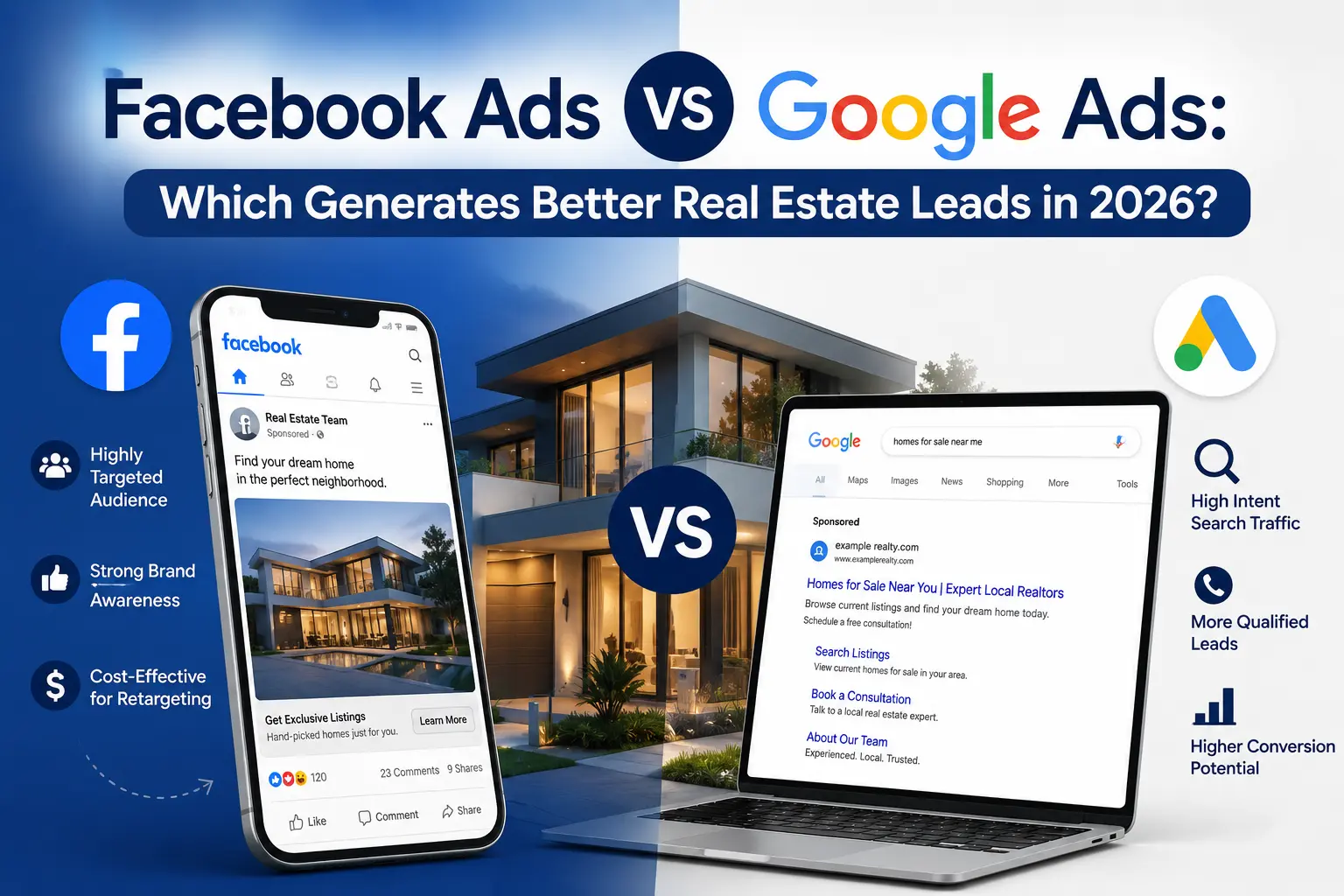
The biggest distinction between google ads and facebook ads lies in user intent.
Google Ads targets people who are actively searching for a service. A user typing “Realtor near me” or “sell my house in Dallas” is already looking for a solution.
Facebook Ads on the other hand interrupt users while they are browsing their feed. Prospects may not be actively searching for a Realtor but targeted campaigns can place your services in front of potential buyers and sellers based on demographics, interests and behaviors.
This difference significantly affects lead quality, conversion rates and advertising costs.
How Google Ads Generate Real Estate Leads
Google Ads capture prospects with immediate intent.
Common searches include:
- Real estate agent near me
- Homes for sale in Houston
- Best Realtor in Phoenix
- Sell my house fast
These users are often further along in the decision-making process.
Benefits of Google Ads include:
- High-intent traffic
- Faster lead generation
- Strong local targeting
- Better conversion potential
- Immediate visibility on search results
However, competition continues to increase across most real estate markets. This has caused the average cost per lead real estate campaigns generate through Google Ads to rise in many cities.
While costs vary by location, competition and campaign quality, Google Ads typically produce fewer leads than Facebook but often deliver prospects who are closer to taking action.
How Facebook Ads Generate Real Estate Leads
Facebook Ads operate differently.
Instead of waiting for prospects to search, Realtors proactively place their message in front of potential buyers and sellers.
Campaigns commonly promote:
- Property listings
- Home valuation offers
- Market reports
- Open houses
- First-time buyer resources
- Neighborhood guides
Advantages include:
- Lower advertising costs
- Massive audience reach
- Advanced demographic targeting
- Strong brand awareness opportunities
- Effective retargeting capabilities
Many agents use Facebook to build awareness before prospects are ready to contact an agent.
As a result, lead volume is often higher but lead quality can vary significantly depending on targeting and campaign setup.
Comparing Lead Quality
When discussing Facebook Ads vs Google Ads, lead quality is usually more important than lead quantity.
Google Ads generally generate prospects who already have a specific need. These users are searching because they want information or assistance immediately.
Facebook users may submit a form simply because an offer caught their attention. Some may be months away from making a decision.
This means:
Google Ads Often Deliver:
- Higher intent leads
- Better appointment rates
- Faster sales cycles
- Stronger conversion potential
Facebook Ads Often Deliver:
- Higher lead volume
- Lower acquisition costs
- Greater brand exposure
- Longer nurturing opportunities
Neither platform is automatically better. Success depends on your goals and follow-up systems.
Cost Per Lead for Real Estate
One of the most common questions Realtors ask is how much they should expect to pay for leads.
The cost per lead for real estate varies based on market competitiveness, targeting quality, ad relevance and landing page performance.
While exact numbers differ by location, general trends in 2026 suggest:
Google Ads
- Higher lead costs
- Higher buyer intent
- More competitive keywords
Facebook Ads
- Lower lead costs
- Larger lead volume
- More variation in lead quality
The true measure of success should not be the cheapest lead.
Instead, Realtors should focus on cost per appointment and cost per closed transaction.
A $100 lead that results in a commission is far more valuable than ten $20 leads that never respond.
Where Google Ads Have the Advantage
Google Ads tend to outperform when:
- Targeting active buyers and sellers
- Generating immediate inquiries
- Competing in high-value markets
- Promoting specific real estate services
- Capturing local search traffic
For agents looking for quick lead generation, Google often produces faster results.
Many Realtors who prioritize transactions over brand awareness choose Google as their primary acquisition channel.
Where Facebook Ads Have the Advantage
Facebook often performs better when:
- Building local brand recognition
- Growing audience awareness
- Promoting listings visually
- Retargeting website visitors
- Generating seller leads through home valuation campaigns
The platform’s visual nature makes it particularly effective for showcasing properties and community-focused content.
Facebook also allows Realtors to stay visible throughout the buyer’s journey, even before prospects are ready to contact an agent.
Why Many Successful Realtors Use Both
The reality is that most top-performing agents do not choose one platform exclusively.
Instead, they combine google ads and facebook ads to create a complete lead generation system.
A common strategy looks like this:
- Google Ads capture high-intent prospects actively searching.
- Facebook Ads build awareness and generate additional opportunities.
- Retargeting campaigns reconnect with previous website visitors.
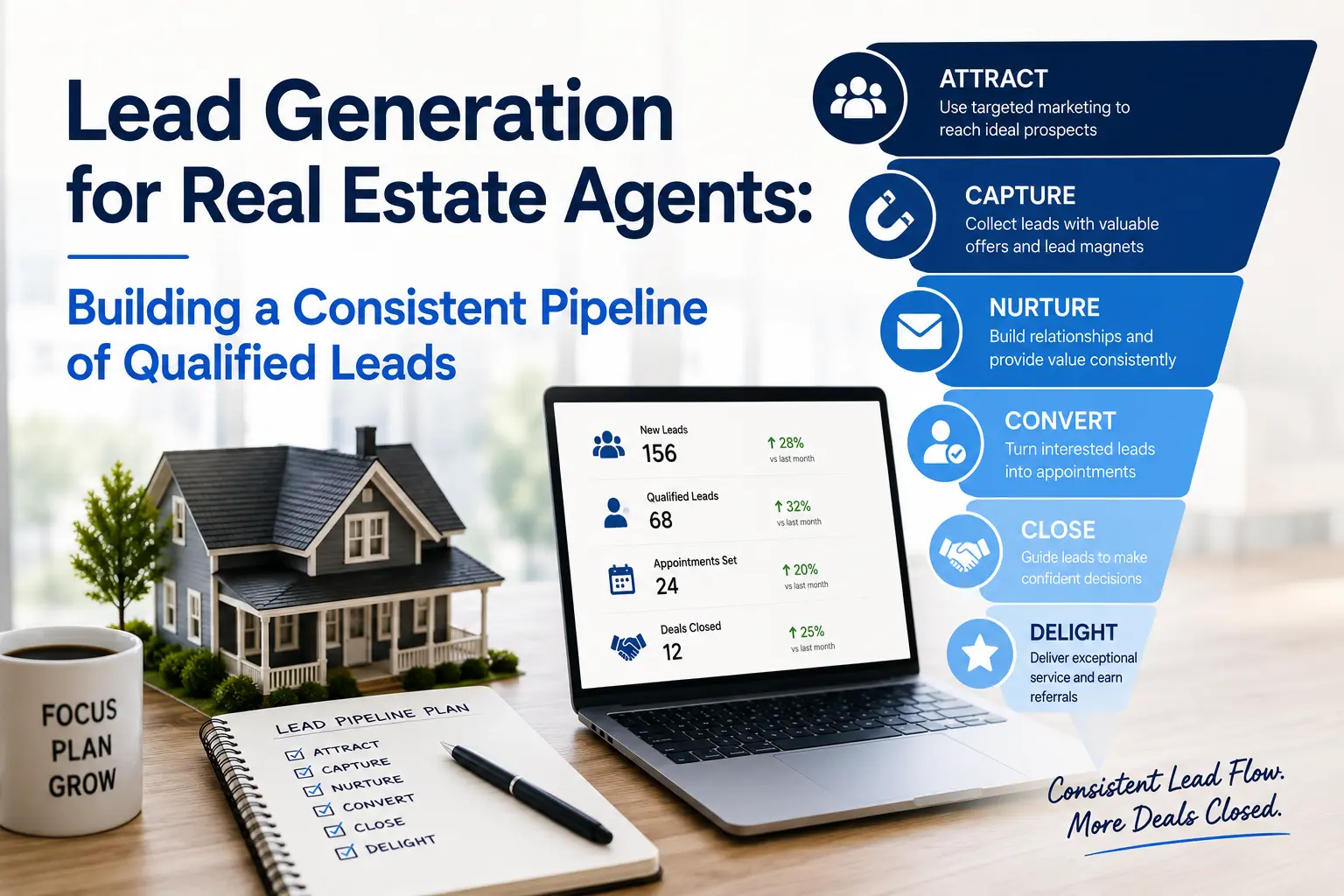
- CRM systems nurture leads until they are ready to move forward.
This approach creates multiple touchpoints and reduces reliance on a single traffic source.
Final Thoughts
The debate around Facebook Ads vs Google Ads will continue because both platforms serve different purposes. Google excels at capturing immediate demand, while Facebook helps create demand and maintain visibility with potential clients.
When evaluating the average cost per lead real estate campaigns generate, focus on lead quality and conversion rates rather than cost alone. The cheapest lead is not always the most profitable lead.
For most Realtors in 2026, the strongest results come from combining both platforms within a coordinated marketing strategy.
At Growth Marvels, we help real estate professionals build lead generation systems that integrate Google Ads, Facebook Ads, SEO, landing page optimization and lead nurturing. Our goal is simple: generate qualified leads, improve marketing efficiency and help Realtors turn advertising investment into measurable business growth.